
Best Convex Database Client in 2026: Why Pluk Stands Out
Best Convex Database Client in 2026
Convex makes building reactive apps feel fast and modern. Your data updates live, your app stays in sync, and the whole experience feels closer to how modern backends should work.
But once your product starts growing, the challenge is no longer just storing and syncing data. It becomes understanding that data well enough to act on it. You are not only checking a few documents anymore. You are trying to figure out what changed, follow relationships across collections, investigate issues, and turn live product data into something useful for yourself or your team.
That is where Pluk comes in.
Pluk gives Convex users a native workspace to explore live data, inspect relationships, build notebooks, and create dashboards from the same place. Instead of treating Convex as something you only inspect in a browser tab, Pluk gives you a dedicated environment to actually work with the data.
This is what makes Pluk more than a simple viewer. It is a workspace for understanding live Convex data and turning it into something useful.
Why Convex users need more than a raw data view
The default data view works when your app is small and your questions are simple. But real products do not stay simple for long.
Soon the questions start sounding more like this: why did signups drop today? Which users are hitting this issue? What changed in this collection? Can I turn this into something I can share with the team? Can I keep this live instead of rebuilding it somewhere else every time?
At that point, raw inspection stops being enough. You need a workflow that helps you move from records to answers.
That is the gap Pluk fills for Convex users.
What you can do with Convex in Pluk
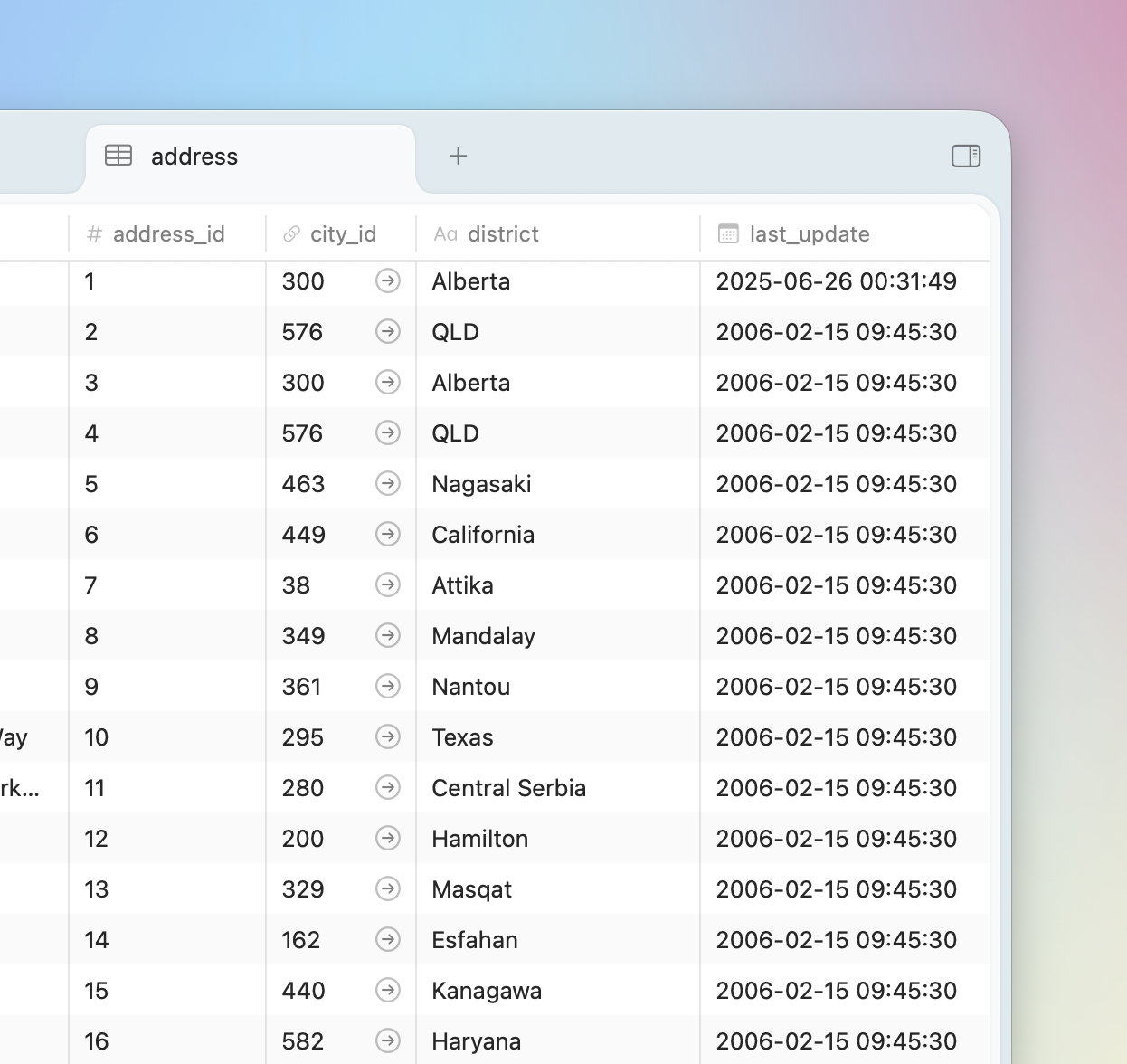
With Pluk, you can connect to Convex, browse collections visually, inspect records and relationships, and work with live data in a more comfortable and flexible way. But the bigger value is what happens after that.
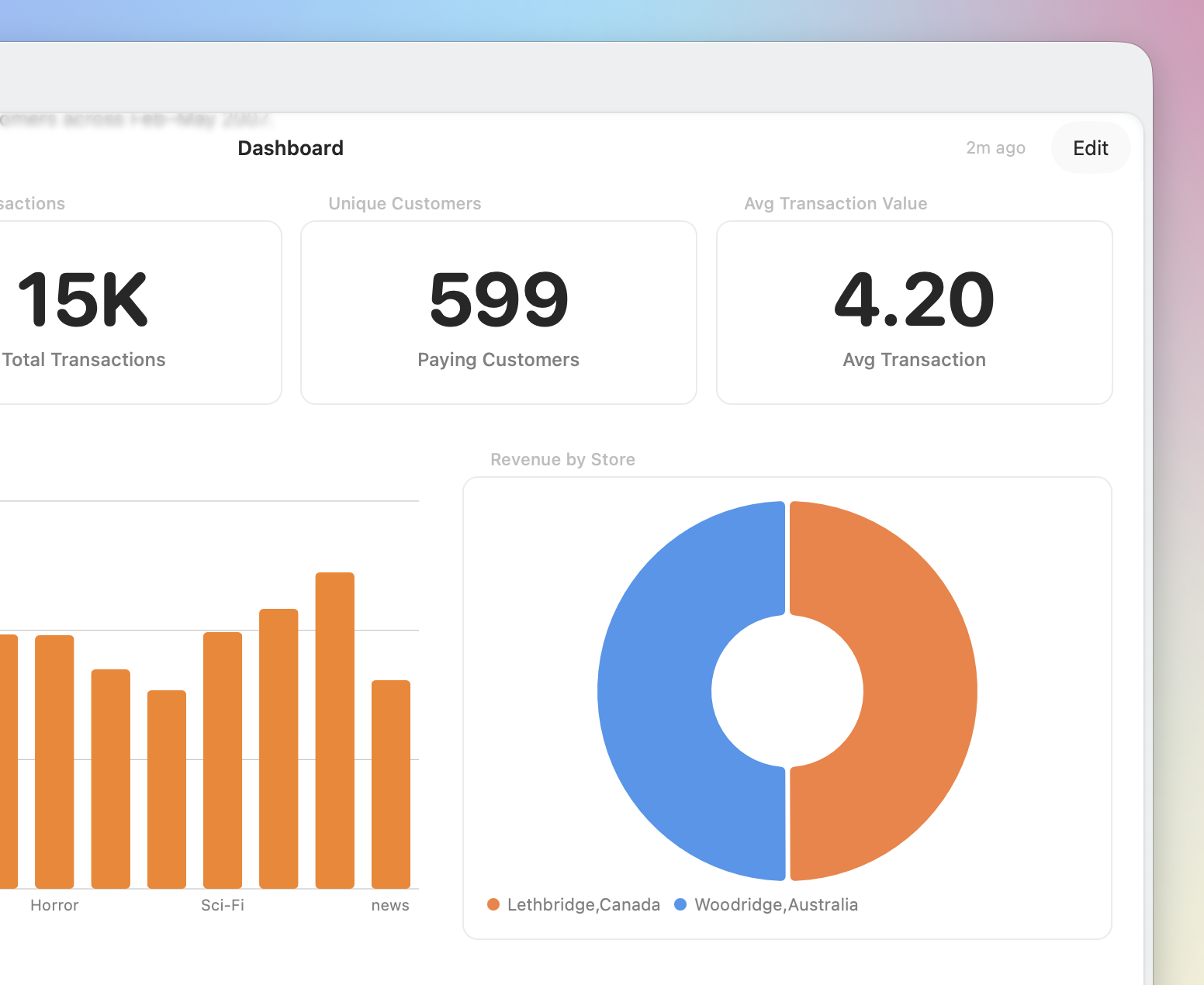
You can start with a question, use Notebook Agent to shape a working draft, refine the analysis, and turn it into a dashboard you can come back to later. That means the workflow is no longer just open data, inspect record, leave. It becomes explore, analyze, save, and reuse.
For Convex users, that is a big shift. It means your live application data can become something you can actually think with, not just something you manually inspect.
Live subscriptions make the workflow much stronger
One of Convex's biggest strengths is that the data feels alive. Updates happen live, and that changes how people expect the rest of the workflow to feel too.
Pluk leans into that.
Instead of treating your data like a static snapshot, Pluk gives Convex users a workspace that makes more sense for live systems. You can explore data as it changes, investigate patterns in real time, and build notebooks and dashboards on top of that same live foundation.
That is a much stronger story than just saying you can browse records. It means live Convex data can become live analysis.
Notebook Agent is the real unlock
This is the part that matters most.
Notebook Agent is not just about adding AI to a database client. It is about helping users go from a question to a useful working draft. That is a very different experience from staring at raw documents and figuring everything out manually.
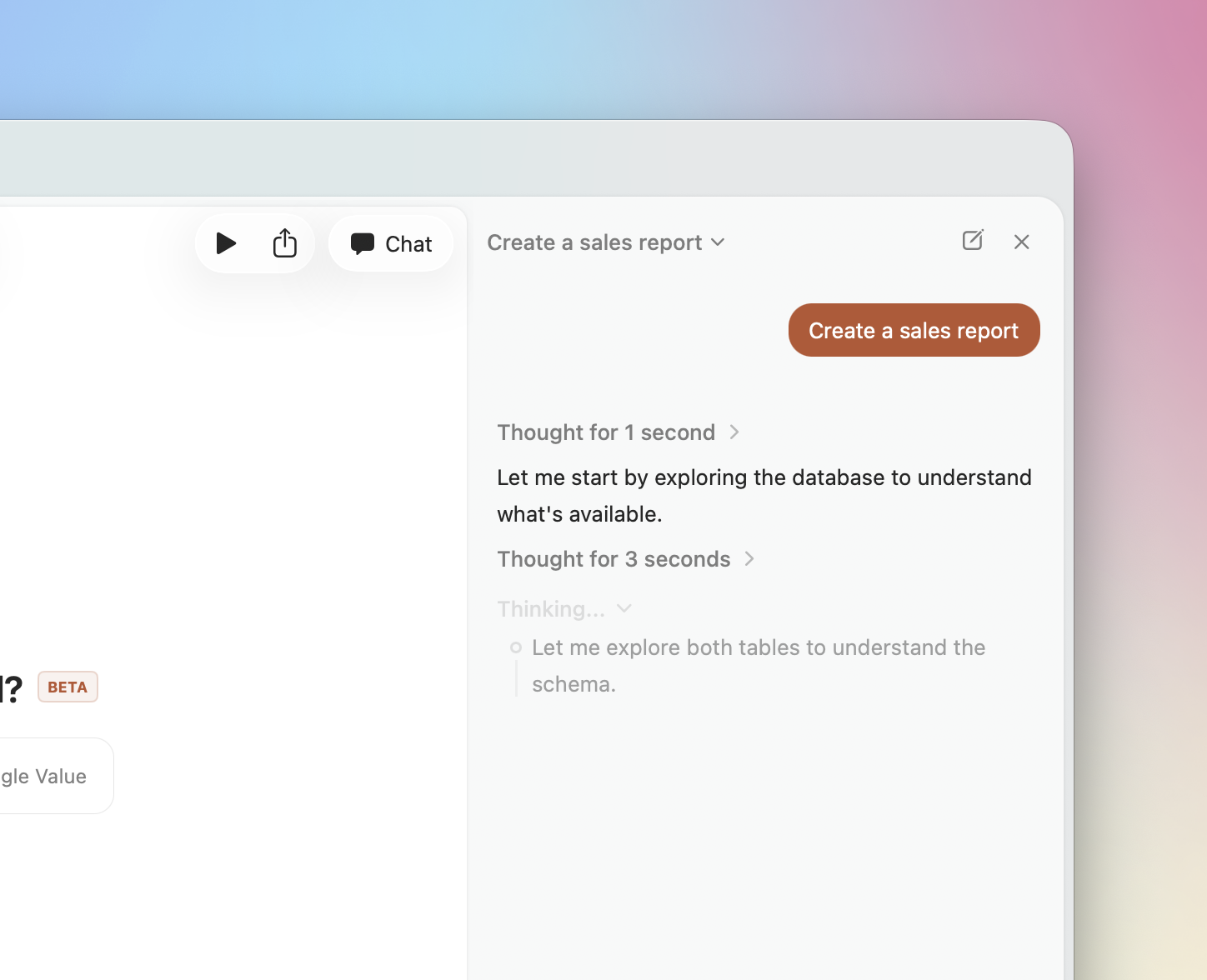
A Convex user might want to build a sales report, analyze failed checkouts, look at user growth trends, or find patterns in support issues. Those are not just lookup tasks. They are analysis tasks.
Notebook Agent gives Pluk a much stronger role in that workflow. Instead of stopping at inspection, it helps you move toward interpretation. Instead of giving you just records, it helps you shape those records into something meaningful.
That is where Pluk starts to feel bigger than a database client. It becomes the place where questions turn into notebooks, and notebooks turn into dashboards.
One workspace across multiple databases
This is another practical advantage that matters a lot.
Many teams are not working with only Convex. They might also have Postgres, MySQL, or SQLite somewhere else in the stack. That usually means switching between multiple tools, multiple tabs, and multiple workflows all day.
Pluk solves that by giving you one native workspace across databases.
So for Convex users, the value is not only better live data exploration. It is also less context switching. You can keep the same workflow even when your stack is not limited to one database.
That makes Pluk especially useful for teams building real products, where Convex is part of a larger system and not the only place data lives.
Why Pluk stands out for Convex users
Pluk stands out because it gives Convex users a better way to work with live data after the backend is already doing its job well.
Convex gives you the reactive backend. Pluk gives you the workspace around that data.
That means you can move faster from question to understanding. You can explore collections visually, inspect relationships, use Notebook Agent to build a working draft, turn that draft into a dashboard, and do it all without bouncing between multiple tools or multiple databases.
That is the real pitch.
Not just a data viewer. Not just another database tool. A native workspace where Convex data becomes something you can explore, analyze, and turn into dashboards.
Final thoughts
If you are looking for the best Convex database client, the real value is not just opening records. It is having one place where live data becomes easier to understand and more useful to work with.
That is what Pluk gives Convex users.
It helps you explore live data, follow relationships, build notebooks, create dashboards, and stay in one workspace even if you work across multiple databases.
Pluk is where live Convex data becomes something you can actually work with.